
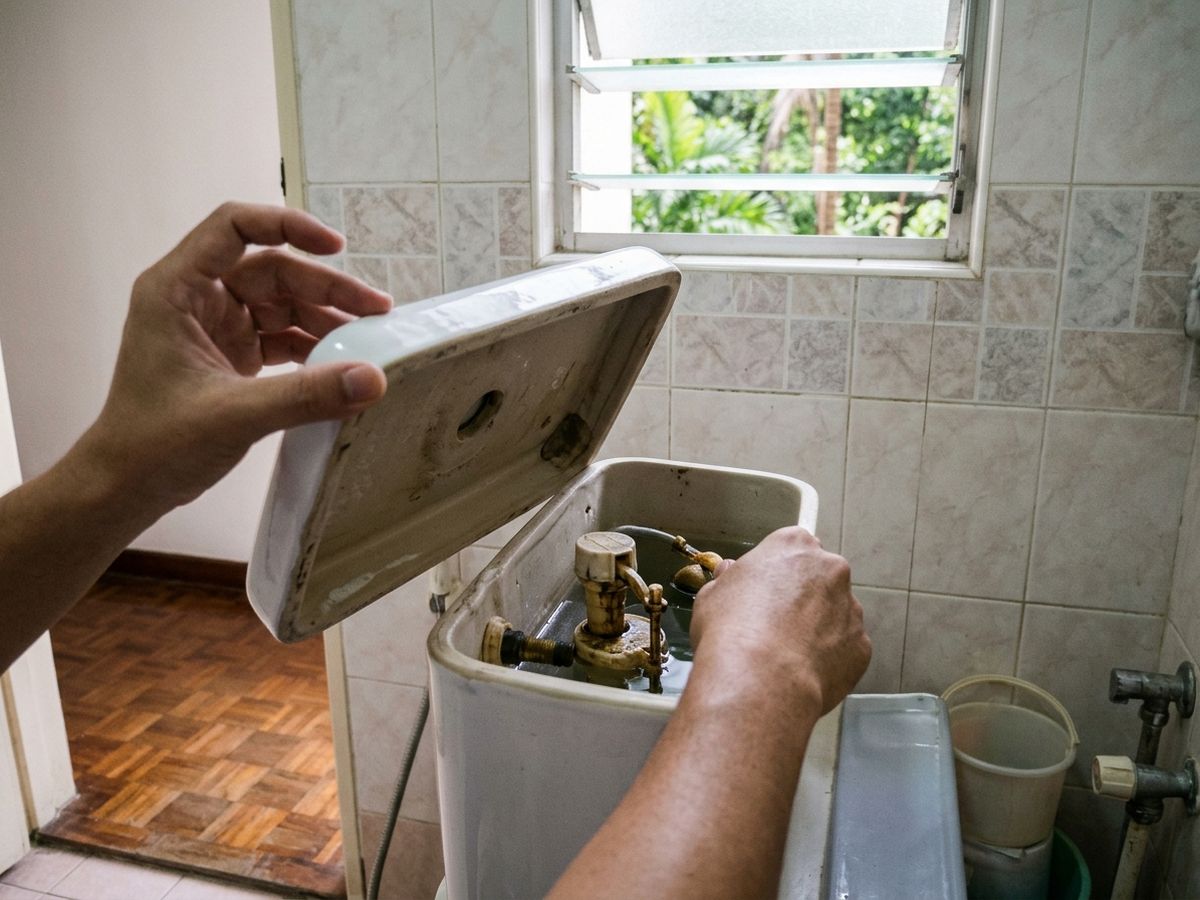
Repair first, if the fitting allows it
In the condominiums off Jalan Maarof, and in the houses of Bangsar Baru and Lucky Garden, the tap that drips or the cistern that hisses may be decades old, set among tiles that can no longer be matched. A repair is therefore the first thing considered. Whether it is practical depends on two things: a part that can still be obtained, and a body sound enough to receive it.
Why an old mixer may not accept a new cartridge
A single-lever mixer is governed by a cartridge. When the mixer drips or the lever grows stiff, the cartridge is the usual cause, and in principle the old one lifts out and a new one drops in. In practice cartridges are not interchangeable. They differ in diameter, in height and in the shape of the stem, and one that is almost right will not seal.
Two further things can defeat the repair. The retaining nut of a mixer that has stood for decades may be seized with scale, and where the water escapes from the body itself a new cartridge cures nothing. A maker's name on the mixer allows a match to be sought before the visit.
Older pillar taps close a rubber washer against a brass seat, and a washer is a small thing to renew. If the seat has become pitted, however, it wears through each new washer in turn, and the tap is better exchanged. A concealed shower mixer is a third case. Its cartridge can usually be reached from the front, but its body is built into the wall and cannot be changed without opening the tiles, which is renovation.
Cisterns: two valves and two different faults
A cistern holds a fill valve, which admits water and closes as the float rises, and a flush valve, which releases it into the pan and should then seal. One that never stops filling has one of two faults, told apart by lifting the lid. If the water stands at the overflow, the fill valve is failing to close. If the level sinks a little and is topped up again, the flush valve is letting water pass into the pan.
Fill valves are broadly standard, once it is known whether the supply enters at the side or at the bottom. On a close-coupled suite the cistern generally has to be lifted off the pan to change the flush valve, and one-piece suites and concealed cisterns often take parts made for that model alone.
Wastes, traps and the hoses under the basin
Beneath a basin or sink, the bend of the trap holds a little water as a seal against the smell of the drain. When a trap drips, a hardened washer or a slackened nut is often the whole of it. The flexible hoses that join a tap or a cistern to the wall deserve a glance at the same time: rust spots or broken strands on the braided cover are reason enough to exchange a hose.
The garden tap on an outside wall of a house belongs on the same list. Its replacement should be one made for outdoor use.
The pantry and washroom taps of a workplace are dealt with under small jobs for offices and shops.
Repair or replace, fitting by fitting
| Fitting | A repair is usually practical when | Replacement is the better course when |
|---|---|---|
| Pillar tap | The washer or the headwork is worn | The seat is pitted or the body is cracked |
| Single-lever mixer | A matching cartridge can be obtained | No cartridge matches, or the body leaks |
| Cistern | A fill valve or a flush seal has worn | The cistern is cracked, or parts for the model are no longer made |
| Basin waste and trap | A washer or a nut is at fault | The metal has corroded through or the plastic has cracked |
Where the water is shut off
No tap can be opened up under pressure, so each job begins with the valve that isolates it. The nearest is the small angle valve on the wall beneath a basin or beside a cistern. Older bathrooms were often built without one, and an old valve can be reluctant to close.
Failing that, the water is closed for the whole home at its stopcock. In a condominium the meter and stopcock commonly sit in a service cupboard off the corridor, which is common property, and the management may have to give access. Air Selangor's responsibility generally ends at the customer's meter, and the pipes beyond it that serve one home are usually the owner's concern. At a house the stopcock is usually beside the meter, near the front boundary. Where the bathroom taps are fed from a tank beneath the roof, closing the stopcock does not stop them at once, so say in your message if the house has one.
Work on water-supply pipes is a regulated trade in Malaysia, and plumbing permits come from SPAN. Ask who is to carry out the pipework side of your job and what permit they hold. A job that calls for an additional supply point, or a change to pipework concealed in a wall, is identified as such before any quote is given.
What moves the cost
Cost follows the part and the access to it. Seized nuts, a cistern that must come off its pan and a stopcock that will not close all lengthen the job. The quote is given once the photographs have been assessed, and a visit is fixed by appointment, Monday to Saturday between 9.00 am and 6.00 pm.
Where the same bathroom has a tired tank on the wall, the page on storage and instant water heaters is the companion to this one. Blackened sealant is dealt with under small repairs and resealing. The same questions arise in the older apartments of Bangsar South.
Questions about taps and leaks
Does replacing a tap mean shutting off water to the whole unit?
Not always. If a working angle valve stands on the wall beneath the basin or sink, only that tap is isolated and the remainder of the home keeps its water. Where there is no such valve, or it has seized, the unit's stopcock is closed while the exchange is made.
Can only the mixer be replaced, or does the whole shower set have to change?
Generally the mixer alone. On an exposed shower set the mixer, the rail, the hose and the head are separate pieces joined by threads that are usually standard, so a sound rail and head may stay. A concealed mixer is another matter: its cartridge and trim can often be renewed, but the body remains in the wall.
Who is responsible for a leak that shows in the unit below mine?
That is not for a repairer to decide, and nothing on this page is legal advice. The strata regulations set out a procedure for leaks between floors, which begins with a notice to the management. Report the matter to your management office in writing. A dispute over the outcome can be taken to the Strata Management Tribunal.